The best project type is the one whose constraints match the property and intended use.
| Project type | Good starting signal | Early constraint | Typical City path |
|---|---|---|---|
| Detached ADU | Usable yard area and a need for separation | Placement, access, utilities, building separation, site work | Standard, catalogue, or Express if eligible |
| Attached ADU | A logical addition zone connected to the home | Structural tie-in, privacy, roof and foundation coordination | Standard review |
| Garage conversion | A legally established shell in a useful location | Existing slab, framing, moisture, fire and utility conditions | Standard review |
| JADU | A compact program fitting within qualifying home space | Size, interior relationship, owner occupancy and covenant | Standard JADU review |
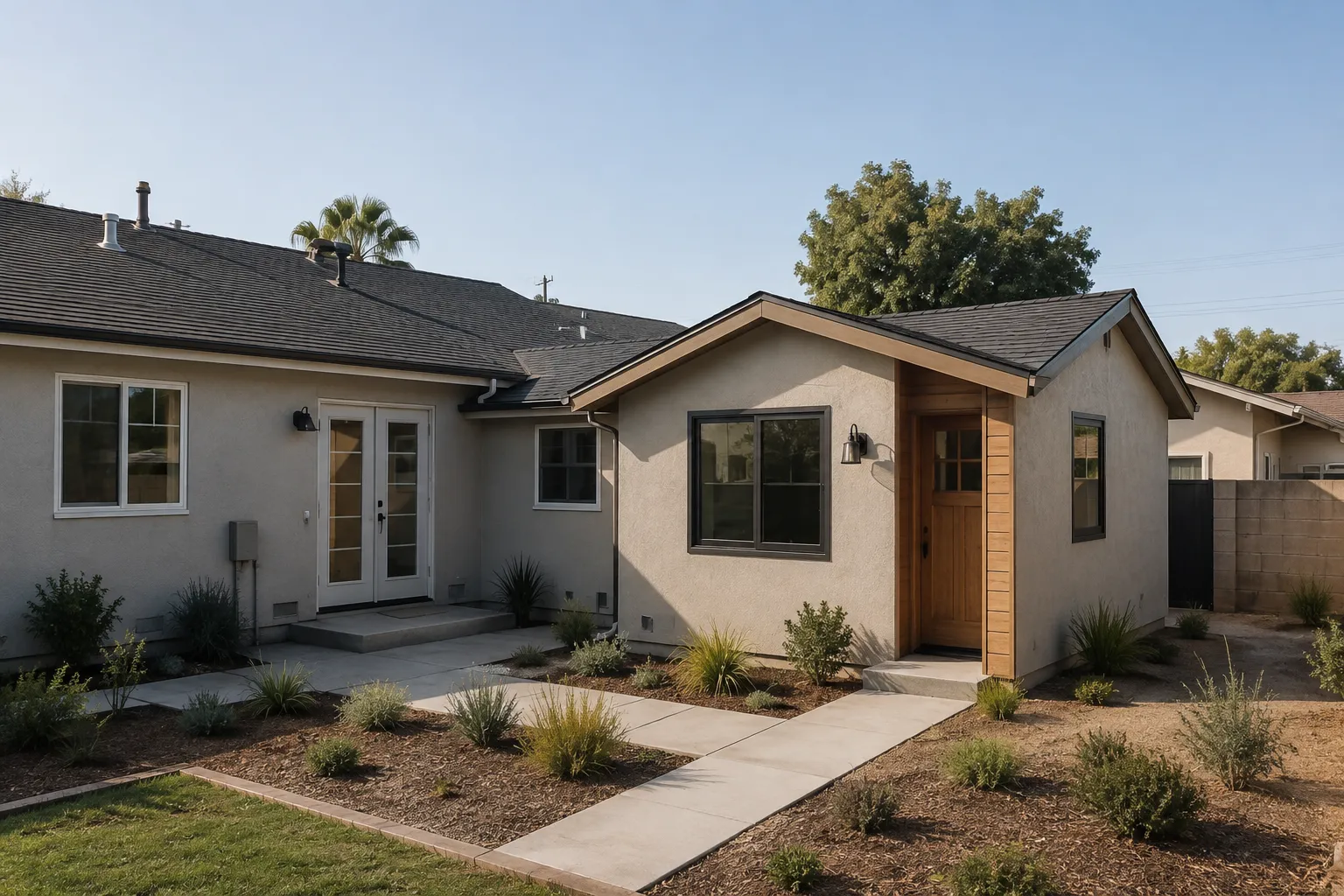

Anaheim identifies three approval approaches overall: standard review, use of a pre-approved plan, and ADU Express for qualifying properties. Read the City overview ↗
Five filters
Ask these before comparing elevations
Long-term household use, aging needs, rental goals, privacy, accessibility, and daily circulation can point toward different building relationships.
Map setbacks, existing buildings, open space, access, grade, easements, trees, utilities, and emergency response before selecting a footprint.
Detached construction offers physical separation. Attached and conversion projects may conserve yard but need closer privacy and shared-building coordination.
A conversion or addition depends on reliable records and field conditions. Unverified existing work is a scope risk, not automatic savings.
A City pathway follows the property and proposal. Express eligibility or a catalogue plan should not dictate a type that fails the owner’s real needs.
Separate must-have program needs from finishes and options. Early flexibility helps the team respond to site findings without losing the project’s purpose.
Decision output
Shortlist two types, with one reason for and against each.
Add the property facts that would resolve the choice: legal records, a utility route, a structural observation, an eligibility result, or a site measurement. That creates a useful investigation plan instead of a preference contest.
Use the guided project planner →